
Amazon Sales Partner vs Competitors: What You Should Know
By Ecomm11 Team ·
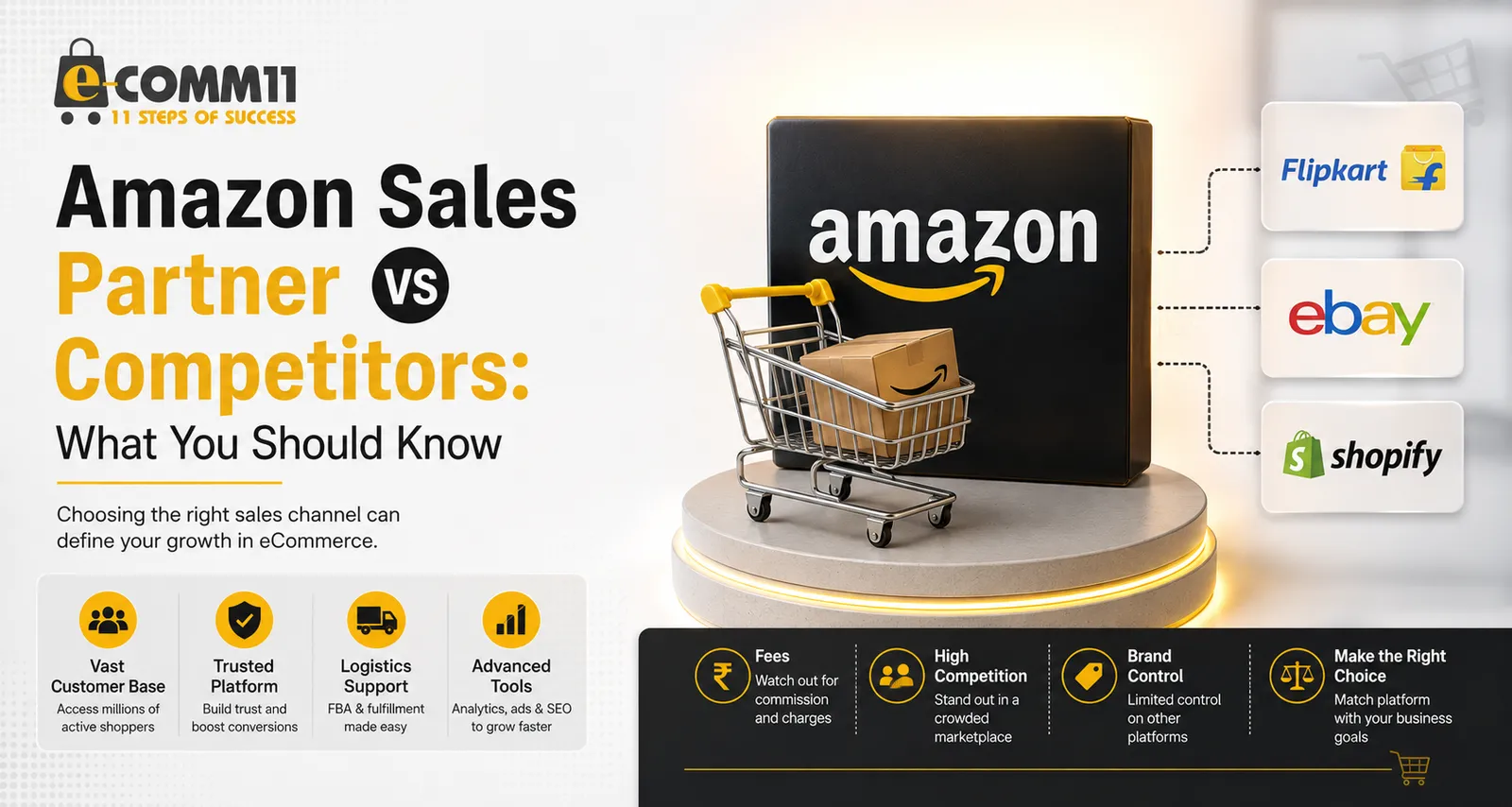
Why Choose an Amazon Sales Partner?
Amazon provides a solid platform that can help increase your brand visibility and sales. When you choose an Amazon sales partner, you gain access to several advantages:
- Vast Customer Base: Amazon has millions of active customers worldwide, giving your products unprecedented exposure.
- Trusted Brand: Customers trust Amazon, which can lead to increased conversion rates for your listings.
- Logistics Support: With services like Fulfillment by Amazon (FBA), you can streamline shipping and logistics, allowing you to focus on growing your business.
- Advanced Tools: Amazon provides tools for analytics, advertising, and SEO, helping you optimize your listings for better performance.
Comparing with Competitors
While partnering with Amazon has its advantages, it’s important to consider alternative marketplaces such as Flipkart, eBay, and Shopify. Each platform offers unique benefits as well:
Flipkart
In India, Flipkart is a major contender with a strong local presence. Advantages include:
- Local Reach: Flipkart focuses heavily on the Indian market, making it ideal for brands targeting Indian consumers.
- Payment Flexibility: Offers a variety of payment options that appeal to the Indian demographic.
eBay
eBay is an established platform with a global customer base. Key benefits include:
- Auction-style Listings: Provides a different selling format which can be enticing for unique products.
- Niche Markets: eBay allows you to reach niche audiences looking for specific items.
Shopify
Choosing Shopify enables you to build a personalized online store. The benefits include:
- Brand Control: Complete control over your branding and customer experience.
- Custom Features: Flexibility to add various features like online payment integration and customer reviews.
Challenges of Each Platform
With advantages come challenges. Here are some challenges to consider when choosing your sales partner:
- Fees: Amazon charges various fees for selling on its platform, which can eat into your profits.
- Competition: High competition within Amazon can make standing out difficult.
- Control Over Branding: On platforms like Amazon and eBay, you may have less control over your brand’s presentation.
Making an Informed Decision
Ultimately, the choice between an Amazon sales partner and its competitors depends on your business objectives. Here are some tips for making an informed decision:
- Identify your target audience and their preferred shopping platforms.
- Calculate the costs associated with each platform, including commissions and fees.
- Assess the features each platform offers in terms of marketing tools and analytics.
- Consider whether you need more control over your brand or are willing to operate within a larger ecosystem.
Related posts
A/B Testing Strategies to Optimise Shopify Facebook Ad Campaigns
eCommerceA step-by-step approach to A/B testing Shopify Facebook ads: what to test first, fair setup in Ads Manager, creative, audience, landing page and offer tests, and how to judge results.
Common Facebook Ads Mistakes Shopify Store Owners Must Avoid
eCommerceThe Facebook ads mistakes that quietly drain Shopify budgets, why each one hurts, and the fix for every one, from tracking and optimisation events to creative fatigue and exclusions.
Google Ads Performance Max Campaigns: A Practical Guide for Shopify Sellers
eCommerceA Shopify seller's guide to Performance Max: what the campaign needs from your feed and tracking, how to structure asset groups, control brand spend, set bids and judge results honestly.