
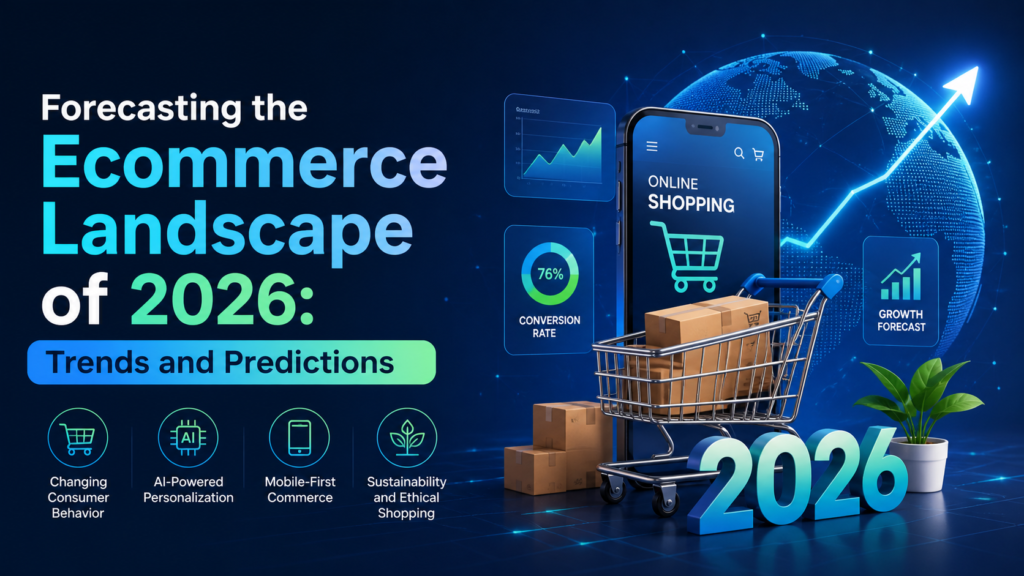
Forecasting the E-Commerce Landscape: Trends and Predictions
Introduction
The e-commerce industry is evolving at an extraordinary pace. With rapid advancements in technology and shifting consumer expectations, businesses must continuously adapt to stay competitive.
What was once a convenience-driven industry has now become a technology-led, experience-driven ecosystem. From AI-powered personalization to instant delivery models, the future of e-commerce is being shaped by innovation and agility.
In this blog, we explore the key trends, market shifts, and emerging technologies that are redefining the e-commerce landscape.
Understanding the Future of E-Commerce
The next phase of e-commerce will be more dynamic, integrated, and data-driven than ever before. Businesses that embrace these changes early will gain a significant competitive advantage.
1. Mobile Commerce Dominance
Smartphones have become the primary shopping device for consumers.
- A majority of transactions now happen on mobile
- Mobile-first design is no longer optional
- Faster checkout experiences are critical
👉 Brands must optimize for speed, simplicity, and seamless mobile UX to maximize conversions.
2. Augmented Reality (AR) Shopping
Augmented Reality is transforming how customers interact with products online.
- Try-before-you-buy experiences
- Virtual product placement in real environments
- Increased buyer confidence and reduced returns
👉 AR bridges the gap between online convenience and offline experience.
3. Hyper-Personalization with AI
Personalization is evolving from basic recommendations to real-time, AI-driven experiences.
- Tailored product suggestions
- Dynamic pricing and offers
- Personalized homepages and journeys
👉 Customers now expect brands to understand their preferences instantly.
Market Growth and Expansion Opportunities
Emerging Markets Driving Growth
Regions like India and Brazil are becoming major e-commerce growth engines due to:
- Increasing internet penetration
- Rising smartphone adoption
- Growing digital payment infrastructure
👉 These markets present massive opportunities for expansion and scale.
Rise of Social Commerce
Social media platforms are no longer just for engagement—they are becoming full-fledged sales channels.
- Shoppable posts and in-app purchases
- Influencer-driven conversions
- Seamless discovery-to-checkout journeys
👉 Social commerce is turning content into commerce instantly.
The Role of Technology in Shaping E-Commerce
Artificial Intelligence & Automation
AI is at the core of modern e-commerce operations.
- Chatbots providing 24/7 support
- Predictive analytics for demand forecasting
- Automated marketing and customer engagement
👉 AI enhances both efficiency and customer experience at scale.
Blockchain for Trust and Transparency
As digital transactions increase, trust becomes critical.
- Secure and transparent transactions
- Reduced fraud and counterfeit risks
- Better supply chain visibility
👉 Blockchain helps build consumer confidence in digital ecosystems.
Evolving Consumer Behavior
1. Demand for Speed and Convenience
Consumers expect faster delivery than ever before.
- Same-day and next-day delivery becoming standard
- Real-time order tracking
- Frictionless checkout experiences
👉 Speed is no longer a differentiator—it’s an expectation.
2. Sustainable Shopping Preferences
Modern consumers are increasingly eco-conscious.
- Preference for sustainable packaging
- Ethical sourcing and production
- Transparent brand practices
👉 Sustainability is becoming a key purchase decision factor.
3. Subscription-Based Models
Subscription commerce is gaining popularity across categories.
- Convenience and cost savings
- Predictable revenue for businesses
- Stronger customer retention
👉 Subscription models create long-term customer relationships.
What This Means for Businesses
To succeed in this evolving landscape, businesses must:
- Adopt a mobile-first approach
- Invest in AI and automation tools
- Explore new sales channels like social commerce
- Focus on customer experience and personalization
- Build trust through transparency and sustainability
👉 The future belongs to brands that are fast, flexible, and customer-centric.
Final Thoughts
The e-commerce industry is entering a new phase where technology, consumer expectations, and innovation intersect.
The boundaries between online and offline are fading, and businesses must rethink how they engage, sell, and deliver value to customers.
Success will not just depend on selling products—but on creating seamless, personalized, and trustworthy experiences.