
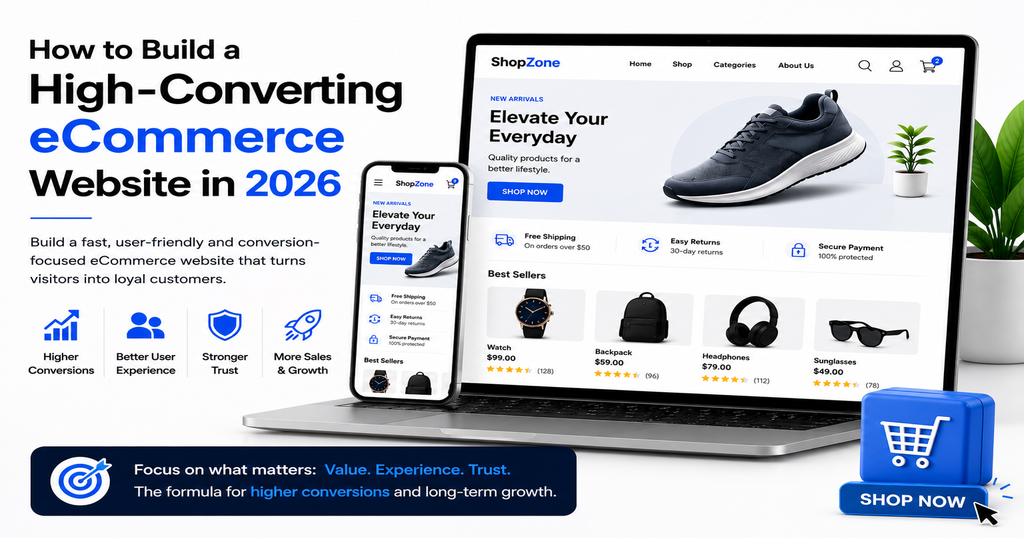
Understanding Conversion-Focused eCommerce Design
Building a high-converting eCommerce website in 2026 requires more than attractive visuals. A successful online store must be strategically designed to guide visitors toward purchasing decisions while delivering a seamless shopping experience. Modern consumers expect websites that are easy to navigate, fast, and highly intuitive. Every design element should support the customer journey, from the homepage and category pages to product listings and checkout.
Clear navigation, organized layouts, and distraction-free interfaces help visitors quickly find products and information. When users struggle to locate what they need, they are more likely to leave the website without making a purchase. Businesses should therefore focus on minimizing friction and simplifying interactions.
A conversion-focused design also prioritizes mobile usability, as a large share of online shopping now takes place on smartphones. Responsive layouts, touch-friendly interfaces, and optimized content ensure a consistent experience across all devices. By understanding how design influences user behavior and purchasing decisions, businesses can create websites that not only look professional but also deliver measurable sales growth.
Optimizing Website Speed and Performance
Website speed has become a major factor in eCommerce success in 2026. Customers expect instant access to products and information, and even a few seconds of delay can negatively impact conversions. Slow-loading websites often experience higher bounce rates, lower engagement, and lost revenue opportunities.
Improving performance begins with reliable hosting and efficient website development practices. Compressing images, reducing unnecessary code, and optimizing scripts can significantly improve loading times. Content delivery networks and caching technologies further enhance performance by delivering website content quickly to users across different locations.
Mobile optimization is especially important, as users may access websites through varying internet speeds and devices. Businesses should also limit excessive plugins and heavy design elements that slow down performance.
Regular performance testing allows businesses to identify bottlenecks before they affect user experience. Tools that monitor page speed and user interactions provide valuable insights into performance issues and areas for improvement.
A fast and responsive website creates a smoother shopping experience, strengthens customer satisfaction, and improves visibility in search engine results. Speed is no longer a technical advantage—it is a business necessity.
Creating High-Quality Product Pages
Product pages are often the deciding factor between browsing and purchasing. In 2026, successful product pages must do more than display information—they must educate, engage, and persuade customers to take action.
High-quality product images are essential for building trust and showcasing details. Multiple viewing angles, zoom functionality, and product demonstration videos help customers better understand the product and reduce hesitation.
Clear and detailed product descriptions are equally important. Rather than listing features alone, businesses should explain how those features benefit the customer. Buyers want to understand how the product solves a problem or improves their experience.
Strong product pages should include:
- High-resolution images
- Accurate pricing information
- Feature and benefit highlights
- Customer reviews and ratings
- Product videos or interactive elements
- Clear return and shipping details
Social proof also plays a powerful role in conversion. Customer reviews and ratings help build credibility and reassure potential buyers.
Calls-to-action such as “Add to Cart” and “Buy Now” should be highly visible and strategically positioned. Personalized recommendations and related products can further improve engagement and increase average order value.
By combining visual appeal with informative and trust-building content, businesses can create product pages that effectively convert visitors into customers.
Leveraging Personalization and AI Tools
Artificial intelligence and personalization have become essential tools for eCommerce growth in 2026. Customers now expect shopping experiences tailored to their interests, browsing behavior, and purchasing patterns.
AI-powered systems allow businesses to deliver personalized product recommendations, targeted promotions, and dynamic content that aligns with individual preferences. These customized experiences make shopping more relevant and engaging while increasing conversion potential.
Personalization can include:
- Recommended products
- Customized landing pages
- Personalized emails
- Dynamic pricing or offers
- Behavior-based marketing campaigns
AI-driven chatbots and virtual assistants also improve customer experience by providing instant responses and product guidance. Real-time support helps shoppers find answers quickly, reducing frustration and improving decision-making.
Predictive analytics enables businesses to anticipate customer needs and optimize product recommendations based on behavioral data. This proactive approach strengthens customer engagement and encourages repeat purchases.
Rather than offering a one-size-fits-all experience, personalization creates meaningful interactions that build stronger relationships and improve customer loyalty. Businesses that successfully implement AI-driven experiences gain a significant competitive advantage in the modern eCommerce landscape.
Simplifying the Checkout Process
A complicated checkout experience remains one of the leading causes of cart abandonment. In 2026, businesses must prioritize checkout simplicity to maximize completed purchases and improve customer satisfaction.
The checkout process should require minimal effort and eliminate unnecessary steps. Customers prefer quick, transparent, and convenient payment experiences.
Best practices for checkout optimization include:
- Guest checkout availability
- Fewer form fields
- Multiple payment methods
- Secure payment gateways
- Autofill functionality
- Progress indicators during checkout
Unexpected charges often lead to abandoned carts. Shipping fees, taxes, and final pricing should therefore be clearly communicated early in the purchasing process to avoid surprises.
Modern payment options such as digital wallets and buy-now-pay-later services cater to diverse customer preferences and increase purchase flexibility.
Security also plays an important role during checkout. Customers must feel confident that their payment and personal information are protected.
A simplified checkout process reduces friction, increases trust, and helps businesses convert more visitors into paying customers.
Building Trust Through Security and Transparency
Trust remains one of the strongest drivers of eCommerce conversions in 2026. Customers are more likely to purchase from brands that demonstrate reliability, transparency, and strong security standards.
Secure payment gateways and SSL certificates are fundamental for protecting customer data and preventing security concerns. Displaying trust badges and security certifications can further reassure shoppers during the buying process.
Transparency is equally important. Customers value clear communication regarding:
- Shipping policies
- Return and refund terms
- Delivery timelines
- Product specifications
- Customer support availability
Accurate product information and authentic customer reviews strengthen credibility and reduce uncertainty. Businesses should avoid exaggerated claims or misleading content, as this can damage brand reputation and customer trust.
Easy access to contact information and responsive customer service further enhance confidence and improve the overall shopping experience.
When customers feel secure and informed, they are more likely to complete purchases and return for future transactions.
Using Data Analytics to Improve Conversions
Data analytics has become a critical tool for eCommerce optimization in 2026. Understanding how users interact with a website allows businesses to identify weaknesses and make informed improvements.
Key performance metrics such as bounce rate, session duration, conversion rate, and cart abandonment provide valuable insights into customer behavior.
Advanced analytics tools offer deeper understanding through:
- Heatmaps
- User recordings
- Funnel analysis
- Customer feedback tracking
- A/B testing
Heatmaps reveal where users click and interact most frequently, while session recordings help uncover frustration points and navigation problems.
A/B testing enables businesses to compare different layouts, messaging, and calls-to-action to determine which versions perform better.
Rather than relying on assumptions, data-driven decision-making allows businesses to continuously refine website design and improve performance.
Ongoing optimization is essential in the fast-changing digital marketplace. Brands that regularly analyze and adapt their websites are better positioned to improve conversions, enhance customer experience, and achieve sustainable growth.
Final Thoughts
Building a high-converting eCommerce website in 2026 requires a balance of strategy, design, technology, and customer understanding. A successful website is not simply attractive—it is designed to guide users through a seamless and trustworthy shopping journey.
By focusing on conversion-driven design, website speed, high-quality product pages, AI-powered personalization, simplified checkout experiences, strong security, and data-based optimization, businesses can create online stores that consistently perform better.
As competition continues to grow, brands that prioritize customer experience and continuous improvement will be best positioned to increase sales, build loyalty, and succeed in the evolving world of eCommerce.