
Quick Commerce in 2026: The Rise of 10-Minute Deliveries Explained
By Akanksha ·
What Is Quick Commerce and Why It Matters in 2026
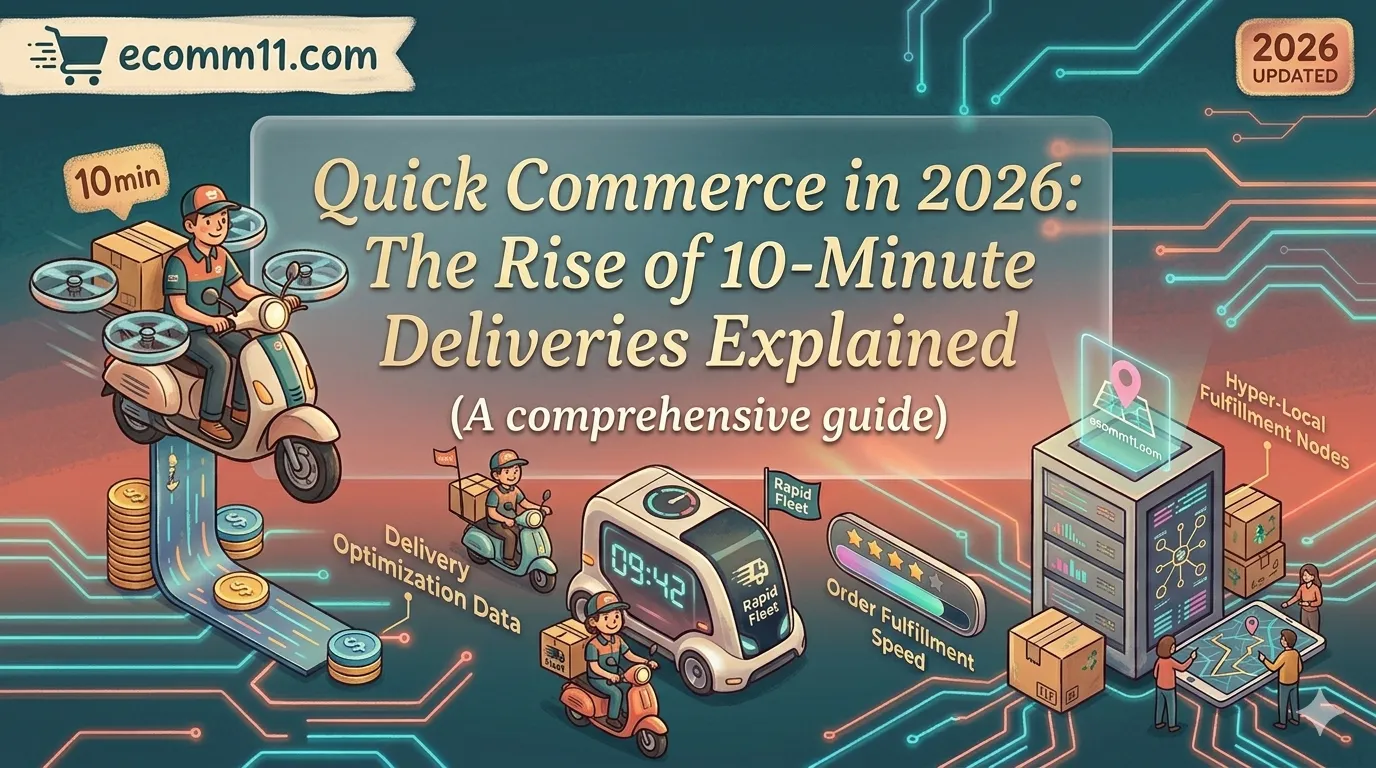
Quick commerce, often referred to as q-commerce, represents the next evolution of online shopping where speed becomes the defining factor of customer experience. In 2026, consumers expect their daily essentials to be delivered within minutes rather than days, reshaping the entire retail landscape. This model focuses on ultra-fast delivery, typically within 10 to 30 minutes, powered by hyperlocal warehouses and advanced logistics systems. The growing demand for instant gratification, combined with busy urban lifestyles, has made quick commerce an essential service rather than a luxury. Businesses are investing heavily in infrastructure and technology to meet these expectations. As a result, q-commerce is not just transforming convenience but also influencing purchasing behavior, encouraging more frequent, smaller orders. Its importance lies in its ability to redefine customer loyalty and set new benchmarks for service efficiency in the digital economy.
The Technology Powering 10-Minute Deliveries
The backbone of 10-minute deliveries lies in modern technology that enables speed, accuracy, and efficiency. In 2026, artificial intelligence and machine learning are used to predict demand, optimize inventory placement, and streamline delivery routes. Dark stores, which are small warehouses located close to residential areas, play a crucial role in ensuring rapid fulfillment. Additionally, real-time data analytics helps businesses track customer preferences and adjust operations accordingly. Automation within warehouses, including robotic picking systems, reduces processing time significantly. GPS tracking and route optimization tools ensure that delivery personnel take the fastest possible paths. Furthermore, advancements in mobile applications allow customers to place orders smoothly and track them in real time. This technological ecosystem works together to minimize delays and maximize efficiency. Without these innovations, achieving consistent 10-minute delivery would be nearly impossible in a competitive and fast-paced market environment.
Changing Consumer Behavior and Expectations
Consumer behavior in 2026 has shifted dramatically due to the rise of quick commerce. Shoppers now prioritize speed and convenience over traditional factors like price or brand loyalty. The ability to receive products within minutes has created a new standard, making longer delivery times seem outdated. This shift is particularly evident in urban areas where fast-paced lifestyles demand immediate solutions. Customers are increasingly making spontaneous purchases, knowing that their needs can be fulfilled almost instantly. This has led to a rise in impulse buying and smaller, more frequent orders. Additionally, consumers expect transparency, such as real-time tracking and accurate delivery windows. Any delay or inconvenience can lead to dissatisfaction and loss of trust. As expectations continue to rise, businesses must constantly innovate to meet these demands. Understanding and adapting to these evolving behaviors is crucial for companies aiming to succeed in the quick commerce ecosystem.
The Role of Dark Stores and Micro-Fulfillment Centers
Dark stores and micro-fulfillment centers are at the heart of quick commerce operations in 2026. Unlike traditional retail outlets, these facilities are not open to the public and are specifically designed for fast order processing and delivery. Strategically located in densely populated areas, they enable businesses to reduce delivery times significantly. These centers are stocked with high-demand products, ensuring that orders can be fulfilled quickly without long supply chain delays. Advanced inventory management systems help maintain optimal stock levels and prevent shortages. Additionally, the layout of these facilities is optimized for speed, allowing workers or automated systems to pick and pack items efficiently. By decentralizing inventory and bringing it closer to consumers, companies can meet the promise of 10-minute deliveries. This model not only improves operational efficiency but also enhances the overall customer experience in a highly competitive market.
Challenges Facing Quick Commerce Businesses
Despite its rapid growth, quick commerce faces several challenges in 2026 that businesses must address to remain sustainable. High operational costs are one of the biggest hurdles, as maintaining multiple dark stores and ensuring fast deliveries require significant investment. Logistics complexities, including traffic congestion and last-mile delivery issues, can also impact efficiency. Additionally, managing inventory accurately across multiple locations is a constant challenge, as stockouts or overstocking can lead to losses. Labor management is another critical factor, with companies needing to balance workforce availability and productivity. Environmental concerns are also becoming more prominent, as frequent deliveries can increase carbon emissions. Moreover, intense competition in the market is driving companies to offer discounts and promotions, affecting profitability. To overcome these challenges, businesses must focus on innovation, cost optimization, and sustainable practices while maintaining high service standards.
Impact on Traditional Retail and eCommerce
The rise of quick commerce is significantly impacting traditional retail and conventional eCommerce models in 2026. Brick-and-mortar stores are being forced to adapt by integrating digital solutions and offering faster delivery options to remain competitive. Similarly, traditional eCommerce platforms that rely on longer delivery timelines are under pressure to accelerate their logistics capabilities. This shift is leading to a convergence of online and offline retail, where businesses adopt hybrid models to meet customer expectations. Quick commerce is also influencing product ассортимент, with a focus on essential and high-demand items rather than extensive catalogs. Retailers are rethinking their supply chains and investing in technology to stay relevant. While this transformation presents challenges, it also creates opportunities for innovation and growth. Companies that successfully adapt to this new landscape can gain a significant competitive advantage in an increasingly speed-driven market.
The Future of Quick Commerce Beyond 2026
Looking ahead, quick commerce is expected to continue evolving and shaping the future of retail beyond 2026. Innovations such as drone deliveries and autonomous vehicles have the potential to further reduce delivery times and operational costs. Artificial intelligence will become even more sophisticated, enabling better demand forecasting and personalized shopping experiences. Sustainability will also play a crucial role, with companies exploring eco-friendly packaging and green delivery solutions to reduce their environmental impact. Additionally, quick commerce may expand beyond groceries and essentials to include a wider range of products and services. As technology advances and infrastructure improves, the possibilities for this model are vast. However, long-term success will depend on balancing speed, cost, and sustainability. Businesses that can achieve this balance will be well-positioned to lead the next phase of innovation in the global retail industry.
Related posts
A/B Testing Strategies to Optimise Shopify Facebook Ad Campaigns
eCommerceA step-by-step approach to A/B testing Shopify Facebook ads: what to test first, fair setup in Ads Manager, creative, audience, landing page and offer tests, and how to judge results.
Common Facebook Ads Mistakes Shopify Store Owners Must Avoid
eCommerceThe Facebook ads mistakes that quietly drain Shopify budgets, why each one hurts, and the fix for every one, from tracking and optimisation events to creative fatigue and exclusions.
Google Ads Performance Max Campaigns: A Practical Guide for Shopify Sellers
eCommerceA Shopify seller's guide to Performance Max: what the campaign needs from your feed and tracking, how to structure asset groups, control brand spend, set bids and judge results honestly.