
Introduction
The e-commerce industry continues to expand rapidly in 2026, creating massive opportunities for entrepreneurs and businesses of all sizes. With increasing internet penetration, mobile usage, and digital payments, launching an online store has never been more accessible or more competitive.
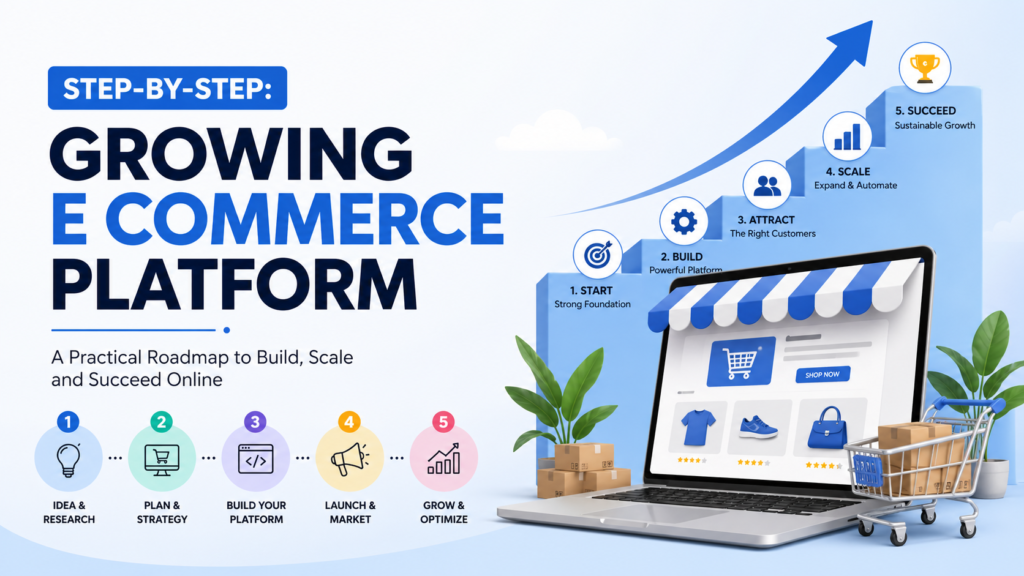
Whether you’re starting from scratch or scaling an existing business, success in e-commerce requires more than just listing products online. It demands a strategic approach, the right tools, and a deep understanding of your audience. In this updated guide, we’ll walk through proven strategies to help you build, grow, and optimize a high-performing e-commerce platform.
Identify a Profitable Niche
Choosing the right niche is the foundation of your e-commerce success. A clearly defined niche allows you to target a specific audience, reduce competition, and create focused marketing campaigns.
Understand Market Demand
Before selecting a niche, research what customers are actively searching for. Look for:
- Trending products with consistent demand
- Seasonal opportunities
- Gaps in the market where competition is low
Tools like Google Trends and marketplace insights can help validate your ideas.
Focus on Product Differentiation
Selling generic products can make it difficult to stand out. Instead:
- Offer unique features or bundles
- Improve product quality or packaging
- Solve a specific customer problem
Define Your Target Audience
Understanding your ideal customer helps you tailor everything—from product selection to marketing messaging. Consider:
- Age group and demographics
- Buying behavior
- Pain points and preferences
A well-defined audience leads to better conversions and stronger brand loyalty.
Choose the Right E-Commerce Platform
Selecting the right platform is critical for managing your operations efficiently and scaling your business.
Popular E-Commerce Platforms in 2026
- Shopify – Ideal for beginners with an easy-to-use interface and powerful features
- WooCommerce – Great for those familiar with WordPress and looking for flexibility
- Magento (Adobe Commerce) – Best suited for large-scale, enterprise-level businesses
How to Choose the Right Platform
When deciding, consider:
- Ease of use
- Customization options
- Payment gateway integrations
- Scalability as your business grows
The right platform should align with your technical skills and long-term goals.
Build a User-Friendly Website
Your website is your digital storefront, and first impressions matter. A poorly designed site can drive potential customers away instantly.
Simplify Navigation
Ensure visitors can easily find what they’re looking for:
- Clear menu structure
- Well-organized product categories
- Search functionality
Use High-Quality Visuals
Images significantly influence buying decisions:
- Use professional product photography
- Include multiple angles and zoom options
- Add lifestyle images to show real-world usage
Optimize for Mobile Devices
With most users shopping via smartphones, your website must be mobile-friendly:
- Responsive design
- Fast loading speeds
- Easy checkout process
A seamless mobile experience can dramatically increase conversions.
Implement Strong SEO Strategies
Search Engine Optimization (SEO) is essential for driving organic traffic to your e-commerce store without relying solely on paid ads.
Conduct Keyword Research
Identify keywords your potential customers are searching for and use them in:
- Product titles
- Descriptions
- Blog content
Focus on long-tail keywords for better targeting and less competition.
Optimize On-Page Elements
Ensure your website is search-engine friendly:
- Use clear headings (H1, H2, H3)
- Write compelling meta titles and descriptions
- Optimize URLs for readability
Build High-Quality Backlinks
Backlinks improve your site’s authority and rankings:
- Collaborate with bloggers and influencers
- Publish guest posts
- Get featured in online directories
SEO is a long-term strategy, but it delivers sustainable growth over time.
Leverage Social Media Marketing
Social media has become a powerful tool for driving traffic, building brand awareness, and engaging with customers.
Choose the Right Platforms
Focus on platforms where your audience is most active:
- Instagram for visual products
- Facebook for community building
- YouTube for product demonstrations
Create Engaging Content
Content is key to capturing attention:
- Short videos and reels
- Product tutorials and demos
- Customer testimonials
Consistency and creativity are crucial for success.
Use Paid Advertising
Social media ads allow you to reach a highly targeted audience:
- Run retargeting campaigns
- Test different creatives and audiences
- Optimize based on performance data
Paid ads can deliver quick results when executed correctly.
Deliver Exceptional Customer Service
Customer experience plays a major role in building trust and retaining buyers.
Respond Quickly to Queries
Fast response times can make or break a sale:
- Use chatbots or live chat
- Provide clear contact information
Offer Hassle-Free Returns
A simple return policy builds confidence:
- Transparent policies
- Easy refund process
Encourage and Use Feedback
Customer feedback is invaluable:
- Ask for reviews after purchase
- Improve products and services based on feedback
Happy customers are more likely to become repeat buyers and brand advocates.
Analyze Performance and Optimize Continuously
E-commerce success requires constant monitoring and improvement.
Track Traffic Sources
Understand where your visitors are coming from:
- Organic search
- Social media
- Paid ads
Focus more on high-performing channels.
Monitor Conversion Rates
Analyze which products are selling well and which are not:
- Optimize underperforming listings
- Improve product pages
Understand Customer Behavior
Use analytics tools to study:
- How users navigate your site
- Where they drop off
- What influences their buying decisions
Data-driven decisions lead to better results and higher profitability.
Scale Your E-Commerce Business
Once your foundation is strong, it’s time to scale.
Expand Product Range
Introduce complementary products to increase average order value.
Invest in Automation
Use tools for:
- Inventory management
- Email marketing
- Customer support
Automation saves time and improves efficiency.
Build a Strong Brand
A recognizable brand helps you stand out:
- Consistent messaging
- Professional design
- Emotional connection with customers
Branding turns one-time buyers into loyal customers.
Conclusion
Building a successful e-commerce platform in 2026 requires a blend of strategy, creativity, and continuous optimization. From selecting the right niche and platform to implementing SEO and delivering exceptional customer service, every step contributes to your overall success.
The digital marketplace is more competitive than ever, but it also offers limitless opportunities for those who are willing to adapt and innovate. Focus on providing value, understanding your audience, and refining your approach over time.