
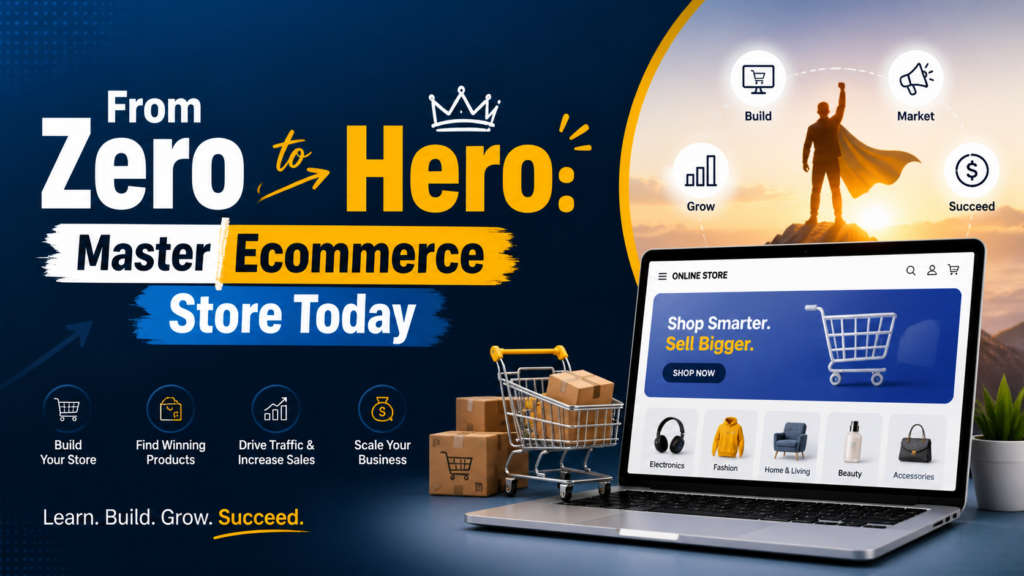
In today’s tech-savvy world, the eCommerce industry has taken the retail space by storm. With consumers leaning towards online shopping, starting your own eCommerce store has never been more accessible. However, transitioning from a novice to a master in managing a successful eCommerce business demands strategy, focus, and effort. In this blog post, we will explore how to elevate your eCommerce store from lonely beginnings to booming successes your journey from zero to hero.
Understanding the E-Commerce Landscape
Before launching your e-commerce store, it’s essential to understand the ecosystem you’re entering. The e-commerce industry is diverse, with multiple business models catering to different audiences and operational styles. Choosing the right model early on can shape your growth strategy and long-term success.
Key E-Commerce Business Models
- B2C (Business to Consumer): The most widely used model where brands sell directly to end customers. Popular marketplaces and online stores operate under this structure.
- B2B (Business to Business): Businesses sell products or services to other companies, often in bulk or through long-term contracts.
- C2C (Consumer to Consumer): Individuals buy and sell directly with each other via online platforms or marketplaces.
- D2C (Direct to Consumer): Brands bypass intermediaries and sell directly through their own websites or apps, maintaining full control over branding and customer experience.
Understanding these models will help you align your business approach with your target audience and goals.
Choosing the Right Niche
Selecting a focused niche is one of the most critical steps in building a successful e-commerce business. A clearly defined niche reduces competition and allows you to target a specific customer segment more effectively.
Here’s how to identify the right niche:
- Study Market Trends: Use tools like Google Trends and analyze social media conversations to identify growing demand.
- Leverage Your Interests: Building a business around your passion or expertise makes it easier to stay consistent and innovative.
- Evaluate Competition: Research competitors and look for gaps or underserved segments you can capitalize on.
For instance, instead of entering the broad fitness market, you could focus on a specialized segment like sustainable fitness products or personalized online coaching.
Building Your E-Commerce Store
Once your niche is finalized, the next step is to set up your online store. Today, several platforms make it easy to launch without advanced technical skills:
- Shopify: Ideal for beginners, offering ready-to-use templates and seamless setup.
- WooCommerce: A flexible option for those using WordPress, allowing greater customization.
- Magento: Best suited for large-scale businesses requiring advanced features and customization.
Choose a platform based on your budget, technical expertise, and scalability needs.
Case Study: Growth of ‘XYZ Fashion’
Consider the example of ‘XYZ Fashion,’ a startup that entered the competitive apparel industry with a focus on sustainable clothing. Launched in 2020 using Shopify, the brand invested heavily in social media marketing and influencer collaborations to build visibility.
Within just one year, the company achieved a 250% increase in revenue, proving that a clear niche combined with smart marketing can deliver impressive results—even in crowded markets.
Effective Marketing Strategies
Creating an online store is just the first step. Driving traffic and converting visitors into customers requires a strong marketing approach:
- Search Engine Optimization (SEO): Optimize product pages, images, and metadata to improve search rankings.
- Pay-Per-Click Advertising (PPC): Run targeted ad campaigns to attract high-intent customers.
- Email Marketing: Build relationships with customers through newsletters, offers, and updates.
- Social Media Marketing: Use platforms like Instagram and Pinterest to showcase products and engage with your audience.
A combination of these strategies ensures consistent traffic and brand growth.
Using Analytics for Smarter Decisions
Data plays a crucial role in scaling an e-commerce business. Tools like Google Analytics help you track performance and understand customer behavior.
Focus on key metrics such as:
- Traffic Sources: Identify where your visitors are coming from and invest more in high-performing channels.
- Conversion Rate: Measure how effectively your store turns visitors into buyers.
- Cart Abandonment Rate: Detect potential issues in the checkout process and optimize accordingly.
Regular analysis allows you to make informed decisions and continuously improve performance.
Delivering Excellent Customer Experience
Customer satisfaction is a major differentiator in e-commerce. A positive experience can turn one-time buyers into loyal customers.
Key practices include:
- Quick Communication: Respond promptly to customer inquiries across all channels.
- Hassle-Free Returns: A clear and simple return policy builds trust and reduces purchase hesitation.
- Loyalty Programs: Reward repeat customers with discounts, offers, or exclusive perks.
Strong customer service not only improves retention but also enhances brand reputation.
Scaling Your E-Commerce Business
Once your store starts gaining traction, the next step is growth. Here are some ways to scale effectively:
- Expand Product Offerings: Introduce related products to increase average order value.
- Offer International Shipping: Tap into global markets to widen your customer base.
- Automate Operations: Use tools for inventory management, order processing, and customer communication to save time and reduce manual effort.
Scaling strategically ensures sustainable growth without compromising efficiency.
Conclusion
Building a successful e-commerce business requires the right mix of strategy, execution, and continuous learning. From selecting a niche to optimizing marketing efforts and delivering exceptional customer experiences, every step plays a crucial role in your journey.
The success of brands like ‘XYZ Fashion’ shows that with a clear vision and consistent effort, significant growth is achievable. Whether you’re just starting out or looking to scale your existing store, the opportunities in e-commerce are vast.
If you’re ready to begin your journey or want expert guidance to take your store to the next level, connect with us today—and turn your vision into a profitable reality.