
Understanding eCommerce and Quick Commerce
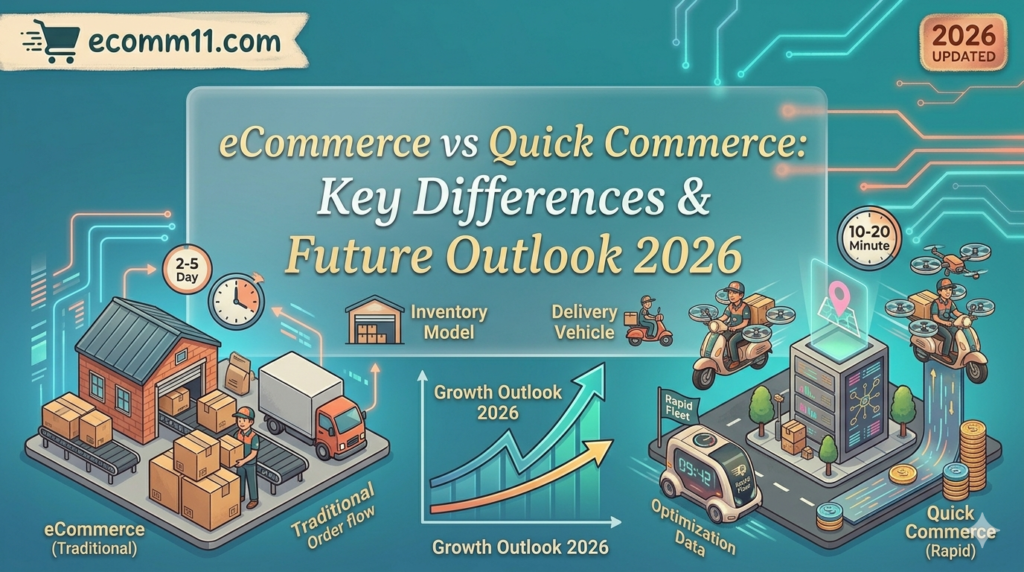
eCommerce and quick commerce are two closely related yet distinct models shaping the digital retail space in 2026. eCommerce refers to the buying and selling of goods online, typically involving delivery timelines ranging from one day to several days. It focuses on a wide variety of products, competitive pricing, and convenience. On the other hand, quick commerce, often called q-commerce, emphasizes ultra-fast delivery, usually within 10 to 30 minutes, catering primarily to urgent and everyday needs. While eCommerce prioritizes assortment and cost efficiency, quick commerce prioritizes speed and proximity. Both models rely heavily on technology, but their operational strategies differ significantly. Understanding these differences is essential for businesses aiming to choose the right model or integrate both. As consumer expectations continue to evolve, these two formats are no longer competing directly but are increasingly complementing each other in the modern retail ecosystem.
Delivery Speed and Customer Expectations
One of the most noticeable differences between eCommerce and quick commerce in 2026 is delivery speed and how it shapes customer expectations. Traditional eCommerce platforms typically offer delivery within a few days, with options for next-day or same-day shipping in some regions. In contrast, quick commerce promises delivery within minutes, setting a new benchmark for convenience. This rapid service has significantly altered customer behavior, as people now expect instant gratification for everyday purchases. While eCommerce customers are willing to wait for non-urgent items, quick commerce users prioritize speed above all else. This shift has forced many retailers to rethink their logistics strategies and invest in faster delivery solutions. Businesses must carefully manage these expectations, ensuring consistency and reliability. Failure to meet promised delivery times can lead to dissatisfaction and loss of trust, making speed a critical factor in customer retention and brand loyalty.
Product Range and Inventory Strategy
The product range offered by eCommerce and quick commerce platforms differs significantly due to their operational models. eCommerce platforms typically provide an extensive catalog, ranging from electronics and fashion to niche and luxury items. This variety is made possible by centralized warehouses and longer delivery timelines. In contrast, quick commerce focuses on a limited selection of high-demand products such as groceries, personal care items, and daily essentials. These items are stored in small, strategically located facilities to ensure rapid delivery. Inventory management is more complex in quick commerce, as businesses must predict demand accurately to avoid stockouts or wastage. eCommerce, on the other hand, benefits from economies of scale and broader inventory flexibility. Both approaches have their advantages, but they serve different customer needs. Understanding these distinctions helps businesses optimize their offerings and align their strategies with consumer expectations in a competitive marketplace.
Operational Models and Infrastructure
The infrastructure supporting eCommerce and quick commerce reveals fundamental differences in how these models operate. eCommerce relies on large fulfillment centers, efficient supply chains, and partnerships with logistics providers to deliver products over longer distances. This model focuses on cost optimization and scalability. Quick commerce, however, depends on a network of dark stores and micro-fulfillment centers located close to customers. These facilities enable rapid order processing and last-mile delivery within minutes. The operational complexity of quick commerce is significantly higher, requiring real-time inventory tracking, route optimization, and a highly responsive workforce. Additionally, technology plays a crucial role in both models, but its application varies based on priorities. While eCommerce emphasizes efficiency and reach, quick commerce emphasizes speed and precision. Businesses must invest in the right infrastructure to support their chosen model and meet the growing demands of modern consumers.
Cost Structure and Profitability Challenges
Cost structure is another key area where eCommerce and quick commerce differ in 2026. eCommerce benefits from economies of scale, allowing businesses to reduce costs through bulk purchasing, centralized warehousing, and optimized shipping processes. This makes it easier to maintain profitability while offering competitive prices. Quick commerce, however, faces higher operational costs due to the need for multiple local warehouses, faster delivery networks, and a larger workforce. The emphasis on speed often leads to increased expenses in logistics and inventory management. Additionally, companies in the quick commerce space frequently offer discounts and incentives to attract customers, which can impact margins. Achieving profitability in this model requires careful planning, efficient operations, and innovative solutions. While eCommerce remains more cost-effective for large-scale operations, quick commerce is still evolving to find sustainable financial models in a highly competitive and fast-paced environment.
Customer Experience and Convenience
Customer experience is at the core of both eCommerce and quick commerce, but the way it is delivered varies greatly. eCommerce focuses on providing a seamless browsing experience, detailed product information, customer reviews, and flexible delivery options. It is ideal for planned purchases where customers take time to compare options. Quick commerce, on the other hand, is designed for instant needs, offering a simplified interface and rapid checkout process. The convenience of receiving products within minutes significantly enhances user satisfaction, especially for urgent requirements. However, maintaining consistency in service quality is a challenge for quick commerce providers. Both models aim to build customer loyalty, but through different approaches. eCommerce emphasizes value and variety, while quick commerce emphasizes speed and accessibility. Businesses must understand these nuances to deliver the right experience and meet the diverse expectations of modern consumers.
Future Outlook: Coexistence and Innovation
Looking ahead to the future of retail in 2026 and beyond, eCommerce and quick commerce are expected to coexist and evolve together rather than replace one another. Each model serves distinct purposes, and their integration can create a more comprehensive shopping ecosystem. Advances in technology, such as artificial intelligence and automation, will continue to enhance both formats, improving efficiency and personalization. Sustainability will also become a key focus, with companies exploring greener logistics and packaging solutions. Quick commerce may expand its product range and improve cost efficiency, while eCommerce may adopt faster delivery options to stay competitive. The lines between the two models are likely to blur as businesses experiment with hybrid approaches. Ultimately, success will depend on understanding customer needs and delivering value through innovation. Companies that adapt to these changes will be well-positioned to thrive in the dynamic and ever-evolving retail landscape.