
How to Use Barcodes and RFID for Inventory Management
By Ecomm11 Team ·
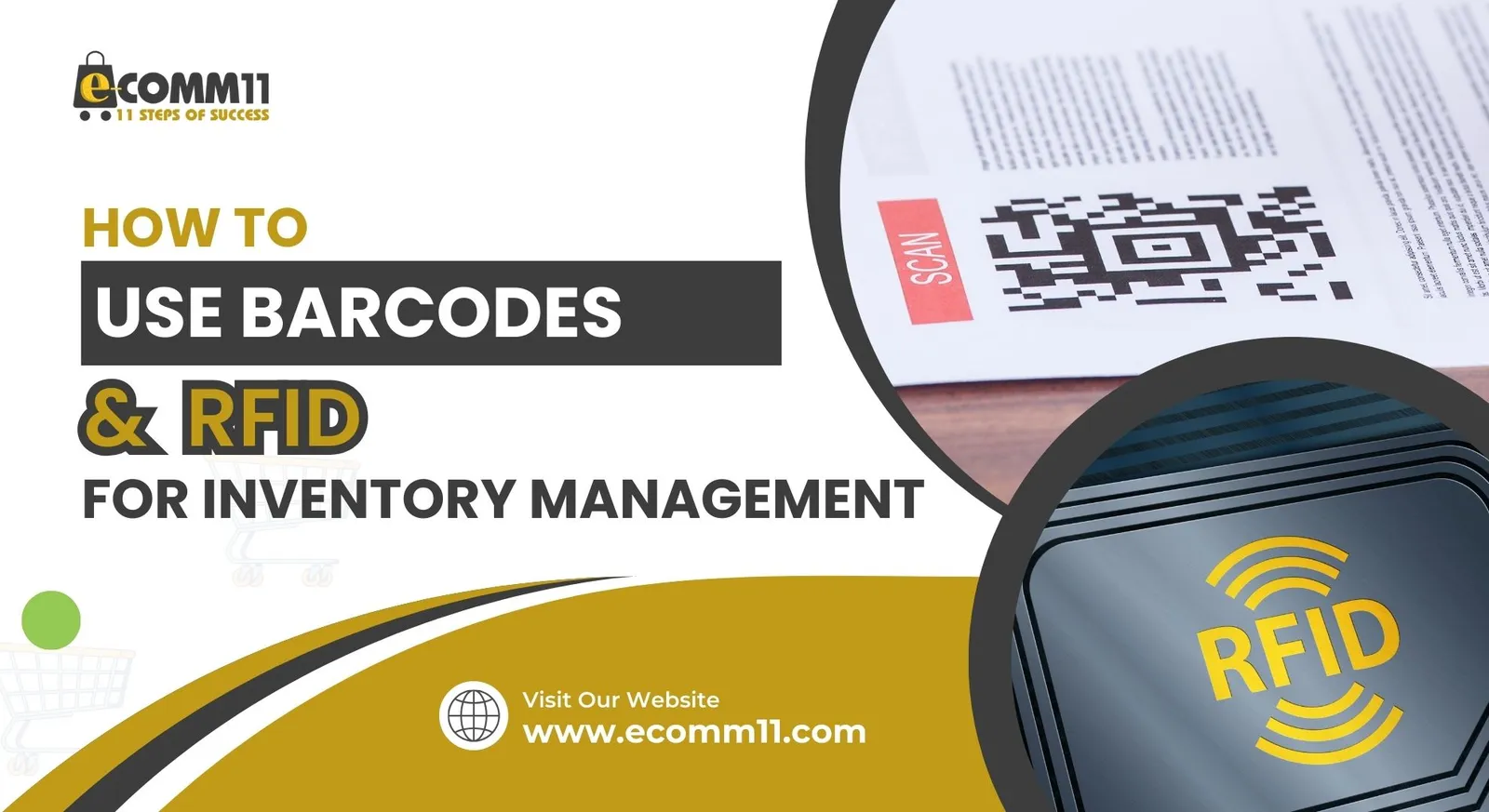
Managing inventory effectively is crucial for any business, especially for startups and growing companies.Barcodes and RFID technology offer efficient solutions to improve accuracy and streamline inventory management processes.In this blog, we will explore how to use barcodes and RFID for better inventory management.
What are Barcodes and RFID?
Barcodes and RFID are technologies used to track and manage inventory.
Barcodes are visual representations of data that can be scanned using a barcode scanner.
RFID (Radio Frequency Identification) uses radio waves to read and capture information stored on a tag attached to an item.
Both technologies help in automating and enhancing inventory management.
Benefits of Using Barcodes in Inventory Management
- Improved Accuracy: Barcodes reduce human errors in data entry, ensuring accurate inventory records.
- Cost-Effective: Implementing barcode systems is relatively inexpensive and easy to set up.
- Quick Scanning: Barcodes allow for quick scanning and updating of inventory levels, saving time.
- Easy Integration: Barcode systems can be easily integrated with existing inventory management software.
Benefits of Using RFID in Inventory Management
- Real-Time Tracking: RFID provides real-time inventory tracking, allowing for better inventory visibility.
- Bulk Scanning: RFID can scan multiple items at once, making it faster than scanning individual barcodes.
- Automated Data Capture: RFID tags can automatically capture data without direct line-of-sight scanning.
- Enhanced Security: RFID tags are harder to counterfeit, providing better security for valuable items.
Implementing Barcodes for Inventory Management
- Select Barcode Type: Choose the appropriate barcode type (e.g., UPC, QR code) based on your inventory needs.
- Generate Barcodes: Use barcode generation software to create barcodes for your products.
- Print Barcodes: Print barcodes on labels or directly on product packaging.
- Attach Barcodes: Attach barcodes to each inventory item.
- Use Barcode Scanners: Equip your team with barcode scanners to update inventory levels.
- Integrate with Software: Integrate the barcode system with your inventory management software for real-time updates.
Implementing RFID for Inventory Management
- Choose RFID Tags: Select the appropriate RFID tags for your inventory items.
- Tag Inventory Items: Attach RFID tags to each item in your inventory.
- Set Up RFID Readers: Install RFID readers at key points in your warehouse or store.
- Integrate with Software: Integrate the RFID system with your inventory management software.
- Train Staff: Train your staff on how to use the RFID system effectively.
- Monitor and Maintain: Regularly monitor the RFID system and maintain it to ensure accuracy.
Integrating Barcodes and RFID for Enhanced Inventory Management
Combining barcodes and RFID can provide the best of both worlds.
For instance, use barcodes for low-cost, high-volume items and RFID for high-value items that require more security and real-time tracking.
This integrated approach can optimize your
inventory management solutions.
Contact Us
If you are looking to enhance your inventory management with barcodes and RFID technology,
Contact us or reach out directly at +91 911 891 1174.
Our team can help you implement the best solutions made for your business needs.
Related posts

The Role of Influencer Marketing in Ecommerce
BigCommerceToday’s ecommerce customers don’t make buying decisions the same way they did a few years ago. Instead of relying only on advertisements or product descriptions, many shoppers discover products through social media, creator recommendations, product reviews, and short-form videos. Before making a purchase, they often look for authentic opinions from people they trust. This shift […]

Headless Commerce: What It Is and Why It Matters
BigCommerceIn the rapidly evolving world of ecommerce, businesses are constantly seeking innovative solutions to stay ahead of the competition. One such solution that has gained significant traction is headless commerce. But what exactly is headless commerce, and why does it matter? This blog will delve into the concept of headless commerce, its benefits, and why […]
Migrating Your Online Store: Best Practices and Common Pitfalls
BigCommerceMigrating your online store to a new platform is a significant decision that can enhance your business operations, improve customer experience, and boost your overall sales. However, the process can be complex and challenging without proper planning and execution. This comprehensive guide will walk you through the best practices for migrating your online store while […]